Quick answer: A dryer that runs but does not heat has most often blown its thermal fuse because the vent is clogged with lint; on electric dryers the next suspect is the heating element, on gas dryers the igniter or gas valve coils. Clear the vent first, then call. Typical repair: $100–$300. Expert Repair Company: $99 diagnostic, waived with repair, (279) 225-1050.
A dryer that runs but does not heat has most often blown its thermal fuse, and the thermal fuse almost always blows because the exhaust vent is clogged with lint. On an electric dryer the next likely cause is a burned-out heating element; on a gas dryer it is a weak igniter or a failed gas valve coil. The motor, drum, and timer all keep going, so the dryer looks fine until you notice the clothes are still damp after an hour. The fix is usually one part and a vent cleaning, and the vent is the part people skip.
Gas or electric: it changes the parts, not the symptom
Electric dryers heat with a coiled element on a 240-volt circuit. Gas dryers heat with a burner lit by a glow igniter and fed by a valve with two small solenoid coils, running on a normal 120-volt outlet. Both have a thermal fuse, a high-limit thermostat, and a cycling thermostat in the airflow path. If you are not sure which you have, look at the plug: a large three- or four-prong plug is electric, a standard plug plus a flexible gas line is gas.
Quick checks you can do safely in 10 minutes
Unplug the dryer before you reach behind it. On a gas dryer, leave the gas line alone entirely.
- Check the breaker. Electric dryers use a double breaker. One half can trip and leave the motor running with no heat. Flip it fully off and back on.
- Check the cycle. “Air fluff,” “no heat,” or an eco setting will tumble cold on purpose.
- Clean the lint screen and run water through it. A screen that holds water has a film of softener on it and is choking airflow.
- Pull the dryer forward and look at the vent hose. Crushed foil hose, a hose full of lint, or a flap outside that does not open when the dryer runs all mean a restricted vent.
- Feel the exhaust outside with the dryer running. Weak, warm, damp air means the vent is the problem, whatever else is wrong.
- Check the door switch. If the drum will not turn at all, that is a different article; the door switch and motor come first.
What not to do: do not bypass the thermal fuse with a wire or a jumper, even to test. It is the only thing stopping a clogged dryer from overheating. Do not open the gas valve or touch the burner assembly, and do not run the dryer with the back panel off.

Causes, from most to least common
1. Thermal fuse
The dryer runs, no heat at all, and it happened suddenly. The thermal fuse sits on the blower housing and opens once, permanently, when the exhaust gets too hot. It cannot be reset. Replacing it is a straightforward technician job, but the vent must be cleared at the same time or the new fuse will blow in a month.
2. Clogged exhaust vent
Clothes take two cycles, the top of the dryer is hot to the touch, the room feels humid, and the outside flap barely moves. The “part” is the vent run itself, from the dryer to the outside wall. Cleaning the first few feet is DIY. Long runs through the attic or a roof cap need a vent brush kit or a vent service.
3. Heating element (electric)
Gradual weak heat, then none. The coil breaks or shorts to the housing. The part is the heating element, sometimes sold as an assembly with the housing. Technician job because the element sits behind the drum on many models and shares a housing with the high-limit thermostat.
4. Igniter (gas)
You hear the dryer start, the igniter glows through the small window at the bottom front, then nothing, and it repeats. Or it never glows at all. The part is the igniter, a brittle ceramic bar that cracks with age. Technician job.
5. Gas valve coils (gas)
The igniter glows bright, the burner lights for the first cycle, and then heat drops out mid-load and does not come back until the dryer cools. Classic failing gas valve solenoid coils. Cheap parts, but the diagnosis takes a meter and a burner test. Technician job.
6. High-limit or cycling thermostat
Heat that cuts out early or never reaches a proper temperature. Both thermostats sit on the heater housing or blower and are tested by resistance. Technician job, and one that is often found alongside a blown fuse after a vent restriction.
7. Timer, control board, or heat relay
Everything tests good but the heater never gets power. On newer dryers the relay is on the control board. Last on the list, and only after the vent, fuse, element or igniter, and thermostats are confirmed.
8. Bad outlet or cord (electric)
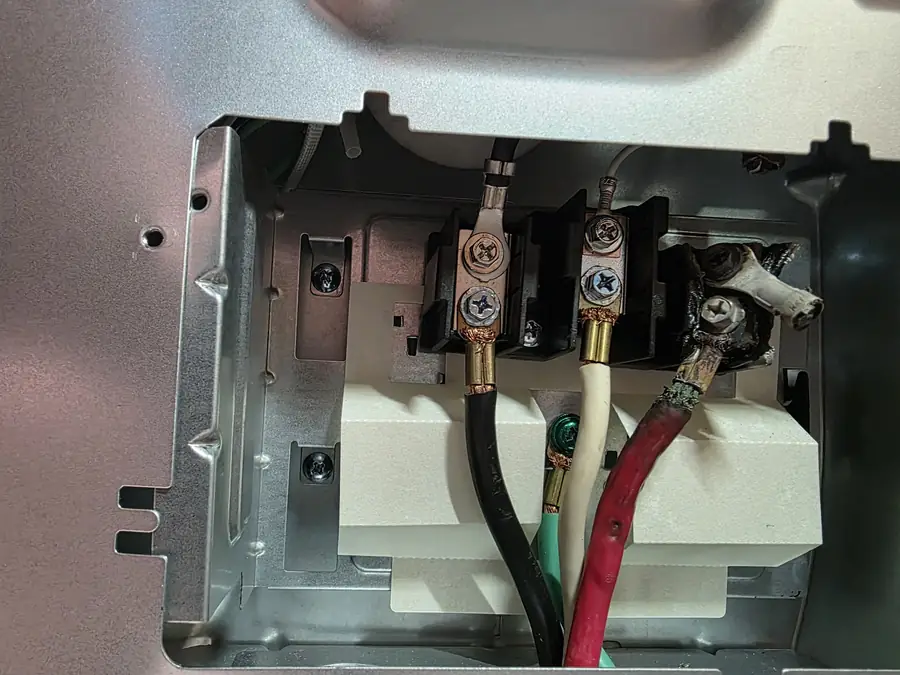
A scorched cord end, a loose terminal block, or a receptacle that only delivers one leg of the 240 volts. The motor runs on 120, the element needs both legs. A technician job, or an electrician if the receptacle itself is bad. Older homes in Carmichael and Citrus Heights with original laundry wiring see this more than newer homes in Roseville.
Whirlpool, Maytag, and Samsung
Whirlpool and Maytag dryers, which share a platform, are the ones I see most often with a blown thermal fuse and nothing else wrong. The fuse sits in an easy-to-reach spot on the blower housing and the vent is nearly always the reason. Samsung dryers more often show up with a heating element that has broken at one end of the coil, and many Samsung models flash a heat-related code on the display before they go cold, so note the code if you see one. Neither pattern is a defect; it is where age and lint land on each design. Brand notes for Whirlpool, Samsung, LG and Speed Queen are on the brands we repair page. If the washer beside it is also acting up, washer won’t drain covers the most common laundry-room companion call. Long vent runs in two-storey Roseville and Folsom homes are the ones that clog most often.

When to stop and call
Stop when the breaker is on, the cycle is a heat cycle, the vent is clear, and the dryer still tumbles cold. From there it takes a meter to tell a fuse from an element from a thermostat, and a gas burner should not be worked on by anyone who does not do it weekly. Expert Repair Company provides dryer repair in Citrus Heights, Roseville, Folsom, Fair Oaks, Carmichael, and Orangevale, and the van carries thermal fuses, elements, and igniters for Whirlpool, Maytag, Samsung, LG, and GE. Call (279) 225-1050 between 8:00 AM and 5:00 PM, Monday through Friday. Same-day appointments are often available.
What the repair usually costs
Typical national dryer repair figures run $100 to $300, with an average around $200, and labor rates of $50 to $125 per hour. A thermal fuse with a vent cleaning sits at the low end; a heating element or gas valve assembly sits toward the top. Our washer and dryer repair cost guide breaks it out by part and covers whether a 10-year-old dryer is worth fixing.
Get the heat back
If your dryer is spinning cold, unplug it, clear what vent you can reach, and call Expert Repair Company for dryer repair. The $99 diagnostic fee is waived when you approve the repair, and $25 covers each additional appliance checked on the same visit.